
There’s a question I get asked occasionally that always gets my supervillainous juices flowing:
“What’s the one marketing campaign you’ve always wanted to execute but never had the opportunity?”
My answer has nothing to do with artificial intelligence, augmented reality, viral TikTok campaigns, or whatever shiny new object currently has the marketing industry collectively salivating.
I want to deliberately turn a beloved brand into a villain.
Make its customers hate it.
Then orchestrate the greatest redemption story its industry has ever witnessed.
I want to execute a marketing world worked shoot.
And thanks to a YouTuber named Reckless Ben and a LEGO retailer called Bricks & Minifigs, I may have just witnessed the closest thing to my dream campaign.
Except there’s one small problem.
The whole damn thing appears to be real.
And the heel may have gone so far that redemption isn’t even an option anymore.
Allow me to explain.
KAYFABE: THE ART OF MAKING PEOPLE BELIEVE
I’ve been a lifelong professional wrestling fan.
Not just the muscle-bound guys in tights pretending to beat the living hell out of each other. What fascinates me is the psychology behind the spectacle. Hell, at age 50 I made the incredibly poor decision to throw my body into the ring and begin training as a pro wrestler. The siren’s call of being a real-life villain and getting paid for it was just too much to resist.
Professional wrestling has perfected something most marketers can only dream of accomplishing.
It makes people emotionally invested in a brand’s success or failure. Wrestling fans don’t simply watch the product. They participate. They cheer. They boo. They buy merchandise. They recruit friends. They passionately defend their favorite performers against complete strangers on the internet. Some even get the logos tattooed on their bodies.
Sound familiar? It should. That’s the holy grail of lifestyle branding I discuss in Marketing For Supervillains.
And one of wrestling’s greatest weapons for creating that level of emotional investment is a concept called kayfabe.
Kayfabe is the presentation of fictional wrestling storylines as reality.
A work is something scripted. A shoot is something real. And a worked shoot is where things get wonderfully complicated.
A worked shoot deliberately blurs the line between reality and fiction. Real frustrations, legitimate grievances, and authentic personalities become ingredients in a larger, carefully orchestrated storyline.
The audience knows professional wrestling is scripted. But when something happens that feels a little too real? Suddenly, everyone’s paying attention. That’s when the magic happens.
And that’s the type of magic I’ve always wanted to bring into the marketing world.
THE HEEL TURN: WHEN HATRED BECOMES A BUSINESS MODEL
In wrestling terminology, a babyface is the good guy. The hero. The one the audience wants to win.
A heel is the villain.
And a heel turn is the moment a beloved character betrays the audience’s trust and becomes the bad guy. Some of wrestling’s greatest moments have come from heel turns.
Hulk Hogan joining the New World Order (NWO) in 1996 is perhaps the most iconic example.
For years, Hogan had been the red-and-yellow-clad symbol of everything good and wholesome in professional wrestling. Then, in one unforgettable moment, he turned against the fans who had worshipped him.
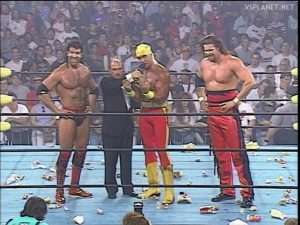
The crowd erupted. Garbage flew into the ring. People were genuinely furious. And the wrestling industry experienced one of its greatest commercial revivals.
Think about that. A brand deliberately made its audience hate one of its most valuable assets. And business exploded.
What other industry would even entertain such an idea?
Certainly not the average marketing department. Imagine pitching this strategy to a room full of corporate stakeholders. “Here’s my plan. We’re going to make our customers absolutely despise us.” I’m guessing you’d be escorted from the building before reaching slide three.
But that’s exactly the kind of dangerous, uncomfortable thinking that fascinates me. In wrestling, hatred isn’t necessarily a negative emotion. It’s an investment.
The audience hates the heel because they care about the outcome. They want justice. They want revenge. They want to see someone finally shut that arrogant bastard up.
And they’ll happily pay for the privilege. A great heel doesn’t simply create enemies.
He creates demand for a hero. Remember that statement. It’s going to become very important.
ENTER BRICKS & MINIFIGS
Now let’s take this concept out of the wrestling ring and into the passion-filled world of LEGO collectors.
Bricks & Minifigs is a franchise business built around buying, selling, and trading LEGO products. On paper, it’s a fantastic concept. LEGO collectors are among the most passionate, obsessive, emotionally invested consumers on the planet. These aren’t simply customers buying plastic bricks. They’re collectors. Historians. Hobbyists. Nostalgia junkies.
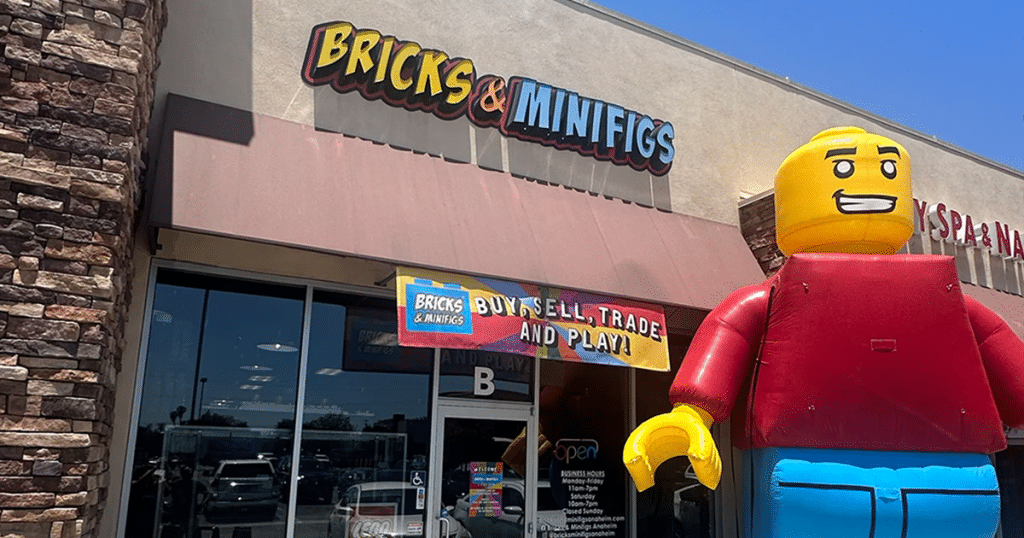
Some collections represent decades of emotional investment, passed from one generation to another. Which makes trust an incredibly valuable part of the business. And an incredibly dangerous thing to lose. Enter YouTube creator Reckless Ben.
Ben became involved in a public controversy surrounding a substantial LEGO collection that had been entrusted to a Bricks & Minifigs location through a consignment arrangement. The dispute over the collection, the agreement, and responsibility for the merchandise escalated into a highly publicized confrontation.
Ben began documenting the situation. And the story took on a life of its own.
(I realize recommending a 90-minute YouTube video about LEGO theft is a tough sell. Trust me when I tell you if you invest at least 5 minutes you will be treated to a storyline and a rabbit hole as good, if not better than any true-crime series Netflix could have produced).
Now, I’m not going to pretend I’m a judge, jury, or forensic accountant. The underlying dispute involves allegations, contested responsibilities, and questions that deserve to be evaluated on their actual evidence. But I’m fascinated by what happened next.
Because from a branding perspective, this wasn’t merely a customer service problem. It was the beginning of a heel turn. And the audience was about to become the booker.
WHEN THE BRAND STARTS CUTTING ITS OWN HEEL PROMOS
In professional wrestling, a promo is a speech designed to advance the storyline and manipulate the audience’s emotions. A great heel promo makes the audience want to see the villain get what’s coming to him. The performer insults the crowd. Mocks the hero. Justifies his actions. And with every word, gives the audience another reason to boo.
Here’s what makes the Bricks & Minifigs controversy so fascinating to me. As the public dispute escalated, the company’s handling of the situation became part of the spectacle. Instead of the controversy simply disappearing into the usual corporate customer-service abyss, public responses and subsequent developments gave critics more material to scrutinize.
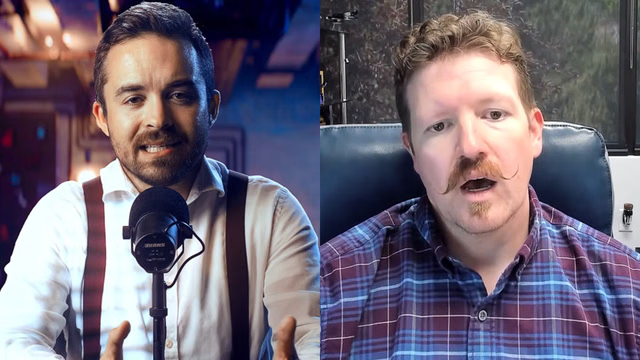
At least among the audience following Ben’s coverage, the company increasingly became a character in the story. And not the character anyone in its marketing department would have chosen.
From that audience’s perspective, Bricks & Minifigs was becoming the heel. Every response risked becoming another promo. Every defense risked sounding like another justification. Every new development threatened to extend the storyline. The brand wasn’t merely fighting over a LEGO collection anymore. It was fighting over how the audience perceived its character.
In wrestling, the performers understand their roles. In business, the innocent franchisee down the street might suddenly find himself playing the villain without ever having auditioned for the part.
And that brings us to a fascinating problem.
THERE’S HEEL HEAT.
AND THEN THERE’S GO-AWAY HEAT.
Here’s where this entire spectacle becomes particularly fascinating to me as a Marketing Supervillain.
If I were hired to engineer the ultimate worked shoot for a struggling brand, I would need to manufacture a heel turn so convincing that the audience genuinely wanted to see the company get its ass kicked. I’d need arrogance. Betrayal. Controversy. An antagonist the audience could collectively despise. But I’d also need something incredibly important.
A way back.
In professional wrestling, there’s a fundamental difference between heel heat and go-away heat. Heel heat is when the audience hates your character so much they buy a ticket to see someone kick your ass. Go-away heat is when they hate you so much they change the channel.
One makes money. The other destroys it.
And that, my fellow Marketing Supervillains, is where the Bricks & Minifigs situation gets downright surreal. The public handling of this controversy has generated the kind of negative reaction among its critics that would make even the most sadistic wrestling booker nervous. Every new development seems to add another chapter to the villain’s story. Every attempt to defend the company’s position risks giving the audience another reason to boo. And some of the audience doesn’t appear interested in watching the heel redeem himself anymore. They seem to want him written off television.
THIS IS THE HEEL TURN NO MARKETING DEPARTMENT WOULD EVER APPROVE.
Think about it. If I pitched this as a fictional campaign, how far would I realistically be allowed to go? Could I deliberately make a beloved brand look arrogant? Maybe.
Could I have its fictional spokesperson insult its audience? Possibly.
Could I create a storyline in which the company becomes the antagonist and a scrappy competitor becomes the hero? Now we’re talking!
But could I convince stakeholders to risk their actual customer relationships, the reputations of independent franchisees, and potentially the long-term viability of their brand just to make the eventual redemption arc more dramatic? Not a fucking chance.
And frankly, I wouldn’t recommend it. Because the purpose of a worked shoot is to blur the lines between reality and fiction. Not to permanently erase the audience’s willingness to trust you.
Yet here’s a real-world controversy in which the brand’s perceived heel persona has become so entrenched among critics that I struggle to imagine a marketing agency deliberately scripting anything comparable.
Which leads me to a rather delicious question:
WHAT HAPPENS WHEN THE HEEL GOES SO FAR THAT THE AUDIENCE NO LONGER WANTS A FACE TURN?
What happens when the audience decides the villain doesn’t deserve redemption?
In professional wrestling, the booker can simply change the storyline. (See John Cena’s abruptly reversed heel turn following The Rock’s idiotic involvement)
In business, the audience isn’t obligated to accept your new script. You can’t just put on a different T-shirt, apologize into a microphone, and expect everyone to cheer. And that’s when something even more interesting happens. The audience starts looking for a new hero. Someone who doesn’t carry the baggage. Someone whose entire origin story is built upon standing against everything the old brand has come to represent.
Someone like Reckless Ben.
AND THEN THE BABYFACE’S MUSIC HITS
Every great wrestling storyline needs someone for the audience to cheer.
Enter Reckless Ben.
What’s fascinating isn’t simply that Ben publicized the controversy. It’s what happens when a creator becomes the audience’s champion. He doesn’t have to spend millions convincing people that he understands their frustrations. He’s already demonstrated his willingness to confront the issue publicly.
He doesn’t have to manufacture a villain. The audience has already identified one. And now, with Reckless Bricks entering the picture, the story has the potential to evolve beyond exposing an alleged injustice. It can become a competing brand created by Ben himself.
Think about the positioning opportunity. The established brand has stores, inventory, infrastructure, and name recognition. The challenger has something considerably harder to purchase.
An origin story.
A reason to exist.
An emotionally invested audience that wants to see him succeed.
And perhaps most importantly, a villain against which to define himself.
In Marketing For Supervillains, I discuss the power of creating brands with cult-like followings. The secret isn’t simply getting people to like your product. It’s giving them something to believe in. And sometimes, the fastest way to define what you believe in is to make it abundantly clear what you stand against.
Reckless Bricks has the opportunity to position itself as the anti-Bricks & Minifigs.
Not necessarily through better prices.
Not necessarily through better inventory.
But through a completely different emotional proposition.
One brand sells LEGO.
The other could sell the feeling of being part of a rebellion.
Same bricks.
Entirely different product.
And here’s the beautiful part, the people who followed the controversy aren’t necessarily just prospective customers…
They could become evangelists.
They’ve already invested time watching the story unfold.
They’ve discussed it.
Shared it. Argued about it.
They’ve become emotionally invested in the outcome.
And if Reckless Bricks can turn that attention into a genuinely trustworthy customer experience, the brand could begin its life with something most startups spend years trying to manufacture.
A community that wants it to win.
That’s not simply a marketing advantage.
That’s a potentially unfair marketing advantage.
THE MARKETING SUPERVILLAIN’S DREAM SCENARIO
Now we arrive at the part of this story that really gets me excited. What if this entire situation had been a work? Not the actual consignment dispute. I’m talking about the brand narrative. Imagine a struggling company whose once-beloved identity has become stale. Its audience has grown apathetic. Its competitors are eating away at market share. Its marketing department keeps producing the same predictable messages about quality, service, and customer satisfaction. The brand is slowly becoming commoditized.
Now imagine proposing something radical.
Rather than pretending everything is wonderful, we acknowledge the audience’s frustration. We create a fictional heel persona around the outdated, arrogant, tone-deaf version of the brand. We allow the audience to reject that persona. Then we introduce a credible challenger who embodies everything the audience wishes the brand could become.
And ultimately?
We engineer the face turn.
The moment the company abandons its old identity, confronts its failures, and earns the audience’s trust again.
The story becomes bigger than the product. The audience doesn’t merely observe the transformation. They participate in it. They feel ownership of the outcome. They want the brand to win because they helped make the victory possible.
That’s a worked shoot applied to brand storytelling. And I’d love to be the evil genius behind one.
To be clear, the legitimate version of this strategy wouldn’t involve manufacturing theft, deceiving customers about real harm, or sacrificing innocent people to create drama. It would involve real grievances, transparent theatrical storytelling, and a genuine transformation.
The emotional conflict would be authentic.
The theatrical presentation would be the work.
And the audience would get a resolution worth cheering for.
But Bricks & Minifigs may have inadvertently demonstrated the fatal flaw in my dream campaign.
Sometimes the heel turn is so effective that the redemption arc no longer belongs to the heel.
Sometimes the audience chooses an entirely new protagonist. And suddenly, the original brand isn’t the hero of its own comeback story anymore. It’s the villain in somebody else’s origin story.
Goddamn. That’s a twist even Vince McMahon would have trouble booking.
THE DIFFERENCE BETWEEN A HEEL AND A MARKETING SUPERVILLAIN
Here’s where I think most marketers misunderstand villainy. They assume being a villain means doing something terrible. It doesn’t. At least not in my world.
A Marketing Supervillain is someone with a contrasting perspective who sees the madness in an industry and decides to reshape it.
The villain label is often simply a matter of perspective. Hulk Hogan didn’t become a different human being when he joined the NWO. He became a different character in the audience’s eyes. And suddenly, everything he did carried a new meaning.
The same phenomenon happens in branding. A company can spend years cultivating goodwill and lose a substantial portion of that goodwill through a single controversy.
But the opposite is also possible.
A brand with a damaged reputation can become the protagonist of an extraordinary comeback story.
The critical ingredient is authenticity.
You can’t simply declare yourself redeemed.
You have to earn the face turn.
And if you’re going to use the audience’s emotional investment as part of your strategy, you damn well better deliver on the promise.
Because wrestling fans know when they’re being worked. And customers do too.
THE MOST IMPORTANT LESSON ISN’T ABOUT LEGO
Here’s my takeaway. The most valuable thing Reckless Ben may have created isn’t another LEGO business. It’s a reason for people to care about one.
That’s the difference between marketing and decommoditization.
Marketing tells people you exist.
Decommoditization gives people a reason to choose you that competitors can’t easily replicate.
You can copy a store layout.
You can copy a pricing structure.
You can copy a loyalty program.
You can even copy a logo, although I’d strongly advise against it.
But try copying an authentic origin story built around a public battle that thousands of people have already emotionally invested in.
Good luck.
And that brings me back to the question that started this whole thing. What’s the one marketing idea I’ve always wanted to execute?
A worked shoot.
A brand that deliberately plays with the audience’s expectations, acknowledges a real problem, embraces the conflict, and ultimately delivers a transformation so satisfying that people cheer for its resurrection.
The Bricks & Minifigs controversy wasn’t necessarily anybody’s master plan. In fact, that’s precisely what makes it such a compelling case study. It’s what happens when the audience starts writing the storyline for you.
And if I were hired to orchestrate a worked shoot for a struggling LEGO retailer, I’d have to spend months creating a believable villain, establishing an emotionally compelling babyface, and convincing an audience to invest in the outcome.
In this case, the audience did almost all of that work themselves. And Reckless Ben may have inherited the most valuable thing a new brand could possibly possess:
An audience that already wants it to win.
No focus groups.
No expensive rebranding exercises.
No six-month discovery phase.
Just a villain, a hero, and millions of little plastic bricks.
I’ve always wanted to orchestrate a worked shoot that turns a struggling brand heel, only to resurrect it as the ultimate babyface. But Bricks & Minifigs may have taught me something I hadn’t considered.
Sometimes the heel goes so far that the only way to save the storyline is to introduce an entirely new brand. And here’s the final irony.
In professional wrestling, the heel usually gets his comeuppance.
In business?
Sometimes he just gets a Chapter 11 filing
